







Look Outside Your Window is not a Slipknot album. But it is the side effect of one.
“If Slipknot hadn’t been in there, we would’ve never done this,” says M. Shawn Crahan, who’s best known as the long-running Midwestern metal band’s percussionist “Clown.” “A little bit of what’s going on down there is the reason this could go on up here.” He’s talking about the recording of Slipknot’s fourth album, 2008’s All Hope Is Gone. That’s when he and several of his bandmates unmasked and picked up unfamiliar instruments in their studio for what turned out to be a different project entirely. Nearly 20 years later, their self-titled debut as Look Outside Your Window will finally hit shelves as a vinyl-only release on April 18, Record Store Day.
The mood of the album’s 10 tracks is unlike anything Crahan or the other musicians he worked with have recorded before. Although the group includes vocalist Corey Taylor, guitarist Jim Root, and DJ Sid Wilson — who are all also Slipknot members — the album often sounds melancholic and brooding, with none of Slipknot’s harshness. The musicians have referenced Radiohead as their touchstone over the years, and while echoes of that band’s calculated restraint and sense of space reverberate throughout Look Outside Your Window, the band’s experimentalism is what most resembles Kid A.
Free from the expectations of Slipknot, the musicians recorded toads and crickets, coaxed Taylor to sing from the bottom of a well, and asked Cristina Scabbia, frontwoman of the Italian goth-metal group Lacuna Coil, to recite an original poem in Italian and sing guest vocals. For years, the only taste of the album that people could hear has been “‘Til We Die,” a moody, jazzy bonus track on the deluxe edition of All Hope Is Gone. But that one song fails to capture the introspection and unique textures on Look Outside Your Window.
“Corey Taylor’s my favorite singer in the world, and he is so different on this, and it’s the same with Jim and Sid,” Crahan, 56, tells Rolling Stone over Zoom on a break from a writing session for Slipknot’s next album. He’s in a bright mood and dressed down today, with a backwards ball cap, his long hair hanging over his shoulders, and his beard in full view. “It’s just us four dudes got together and wrote some music and ended up being 11 songs and pretty serious lyrics about the time period.”
Editor’s picks
On opener “11th March,” Taylor sounds like he’s on the verge of tears, singing about how everyone should come together to become one, as strange sounds clang and whirr around his voice. Root’s guitar rings out like a harp on “Moth,” Crahan’s percussion rattles on “Dirge” (which sounds more like Q Lazzarus than Radiohead), and “Is Real,” one of the few hard-rock-leaning songs, has a looseness to it that feels miles apart from metal. The album’s jewel, “Juliette,” finds Taylor sounding pensive as he sings, “Hey there, Mr. Blue Eyes, have you found your way back yet? Have you found your Juliette?” over crisp guitar.
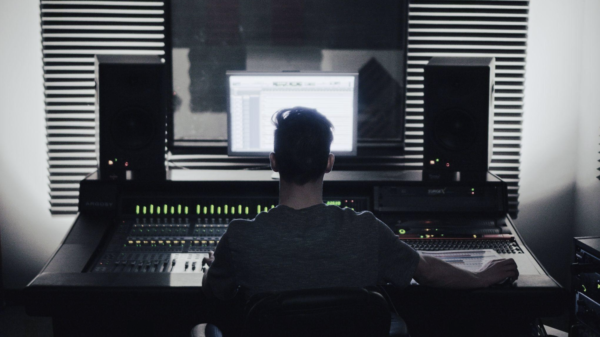
The album’s roots stretch back to Slipknot’s third LP, 2004’s Vol. 3: (The Subliminal Verses), when producer Rick Rubin introduced them to his “open lab” theory of creating a separate safe place for experimentation. So when the band began tracking their next album, All Hope Is Gone, at Sound Farm Studio in Jamaica, Iowa, Crahan put together a little studio in the room he was renting where he and Root could write music. “While you’re making an album, there’s so much downtime,” Crahan says. “And I just had so much creativity coming through me that I would feel guilty if I was away from my family in a studio not doing anything creative.” They felt good about the music they were making, so they rented out a farmhouse on the property to experiment more. Eventually, Taylor and Wilson wanted in, and the quartet came together.
Although Slipknot was experiencing turbulence (Wilson, notably, was sick around the time they made the album; others struggled with addictions), Look Outside Your Window’s sonic dabbling proved inspiring. Despite not feeling well, Wilson pushed himself outside of the box, playing piano, while Taylor played some drums, kegs Crahan that uses for percussion in Slipknot, and other instruments.
Related Content
“I feel [doing Look Outside Your Window] drove me to be insanely creative,” Crahan says, smiling. “We were just vomiting wonderful feelings. It was very enjoyable to be able to get it all out.”
Why did you name the group Look Outside Your Window?
One night, we were sitting in the studio, and we looked out and saw some eyeshine on the tree in front of the window. It was pretty high up in the air, probably most definitely a raccoon looking in at us. But we started imagining cryptic mothmen, and Jim called the second song “Moth.” By the end of it, Jim was walking away, and he said, “Always look outside your window.” It just meant so much, and I just kept saying it over and over again. It just really solidifies who we were, what we were doing, the conversations we were having between writing and having to go down and contemplate [Slipknot], which is huge.
What informed the vibe of the music?
Well, Jim and I love particular music that’s not heavy. The alternative movement started when I was 19 or 20 years old, around college. So I was growing up with the greatest albums, like [Soundgarden’s] Louder Than Love or [the Smashing Pumpkins’] Gish or Pearl Jam’s first album, anything from Sub Pop. But then I’m an old punk rocker, too. I like Big Black/Steve Albini stuff. I like real aggressive stuff like Scratch Acid and Killdozer. And with Jim, we both love Radiohead. All this different stuff fed my moods.
So the mood you hear is Jim and I constantly wanting to make this music we love that makes us happy to hear. That music is a lot artier.
What do you think fans of your other band would make of those influences?
What is the problem with the intellectual thinking that metal fans also like the Beatles? Do metal fans not like Radiohead? Well, I wouldn’t say I’m the biggest metalhead, but I like metal and I like Radiohead. I like Pink Floyd, Porcupine Tree, Helmet, Tom Waits, and Mike Patton. Who cares?
What informed the mood of the music?
I don’t want to speak for Corey, but he definitely had something going on. He definitely is harnessing something. I won’t say we were all getting along because we weren’t, but it’s just regular band stuff. It’s not end-of-the-world stuff, but as you know, we lost Paul Gray after that album cycle, so we had a lot of things going on. The mood was what was happening in our brotherhood: very, very serious things. They were very trying times.
There’s a lot of melancholy in Look Outside Your Window.
Yeah. The album doesn’t make me cry, but it hurts. There are a lot of things that make me stop and look at myself and my life. Some of our brothers are gone. So that album ended up being a real good timestamp on other emotions … because [in Slipknot] we’re just nine human beings deciding to share our time together.
You made the most of your time during those sessions, though. Is it true Corey sang some of the songs from the bottom of a well?
There was a water well outside the old farmhouse. We opened it up and it’s got all this reverb. And we’re like, “Hey, this is going to sound amazing on Corey.” So we made Corey get down in the well, but it didn’t work out like we wanted it to at the time.
I’m an experimentalist. I do anything I can to make the experience different and fruitful. “Let’s make them part of the art.” I’m just one of those guys that will use the creaking door, anything, because they are truthful in the moment. We heard toads and crickets outside, and they sounded beautiful. It’s like, “These damn toads won’t shut up. So guess what: This song’s called ‘Toad,’ and here’s these toads.” We forgot they were even there. But the engineer didn’t. Every day, he’s like, “Those damn toads are in the drum tank.” And I’m just like, “Leave those bastards.”
How else did the four of you experiment?
Jim would be playing guitar and throwing his guitar pedals over he couch. I was grabbing them and Sid comes in and grabs a pedal, and everybody’s doing emotions. There’s no reason for it. We were just trying things. Corey’s like, “I want to play the keg.” The kegs aren’t mine; I didn’t invent them. So yeah, “Please, you play the keg. Let’s see what you come up with.”
Do you have a lot of leftover music?
I could probably get another five songs [out of the sessions] but they wouldn’t be so complete as these. And Corey would have to sing all of them. There is one song that didn’t make it, but it was heavier, more like a Neurosis thing. I don’t know why it didn’t mix in; it felt a little out of place and intentional. Eventually, it’ll come out.
How did Cristina Scabbia get involved with Look Outside Your Window?
Jim and she were dating. She’s a talented artist, and she was up in the house. I had to go to Jim, like, “Hey, what do you think about getting Cristina on?” And he said, “Absolutely.”
The first thing I did was make her write a poem, a letter of intent in Italian. I told her to make it about batteries that are dying that cannot be recharged. And she’s like, “OK.” I have the piece of paper in Italian, and she did her best to read it to me, but I’ve never read it since then or memorized it. I just like to hear it the way it is. Jim and I were producing her, really making her get conviction. By the end, you could just feel it.
She also sang on “Is Real.”
One of my favorite moments was when she was done, and Corey Taylor came in the next day, and we’re like, “Hey, we got something to play you.” He had already sung on the song. So he thinks she’s just doing the poem, but then she’s busts into that vocal, singing, going for it. I just remember Corey going back a little bit and he goes, “OK.” He loved it, but it really surprised him in a good way.
I want to say she got in the well, too for something. Maybe she read that thing there, I don’t know. But the well had a dead rat in it and a bunch of dead bugs and it was filled with water. It had a vibe and it definitely made you work towards your art.
My favorite song on the album is “Juliette.” How did that one come about?
I don’t know if I have a favorite, but that one really speaks to me. And of course the lyrics are like, “Hey, blue eyes,” and I got blue eyes, Corey’s got blue eyes. We had a conversation and we went down the Shakespeare road for a moment, like, “What’s your Juliette? What are you going to die for?” That song got deep in some things, as well as some philosophy.
I also like “In Reverse,” and Corey Taylor on “Dirge” is just … I don’t know. The music will stop and get real micro, and then he’s got that voice that gets you feeling a certain way. So I love them all for all different reasons, but I’d say “Juliette” is really something that drove me to get it all done. They’re all real to me.
How did making Look Outside Your Window affect what you do with your other band?
After All Hope Is Gone, the open lab became a staple. We recorded .5: The Gray Chapter over at Sunset Sound. Studio One is, like, the Doors’ studio. Studio Two is the big room where Van Halen’s done some stuff. And Prince made an identical copy of Studio Three at Paisley Park. So we made the open lab in there and let Prince drive the creativity in. If you want to play harmonica, walk down the hall, come in here, play harmonica. But that time, it was expected that anything written there can be on the [Slipknot] album. We can even fly parts from here over there for songs.
Then we did We Are Not Your Kind and had another open lab. We wrote “What’s Next” in there. That album’s fascinating because we had 21 songs and 27 interludes, and all the interludes were made in the open lab. In the end, we only used three of them on the album. So there’s 24 other interludes. Then when The End, So Far started, [engineer] Gregory Gordon led the open lab. At that point, everyone knew that it was expected to create whatever you want, however you want it, whenever you want it, for whatever reason, and just be creative.
“Adderall,” a song on The End, So Far, reminds me of Radiohead and Look Outside Your Window.
We didn’t open an open lab that time, but I knew I could say, “Michael [Pfaff, percussion] and I wrote the song from modular synths and a key called ‘Adderall.’ I’m going to go play drums right now.” And we did that song in one take. That song was born from the ability to have established the open lab.
Do you see releasing Look Outside Your Window as the end of a chapter for you?
Yes, it is definitely closing a chapter in that maybe it should have come out a long time ago, but Slipknot always stopped the forward motion of it because we’d be in an album cycle and releasing it would have disrupted both things. So I finally put my foot down, and everybody’s like, “It’s about time.”
I love this album so much. I know people are going to love it and I’ve accepted that it’s going to get confused [with Slipknot]. But it’ll also open up the next generation of Look Outside Your Window.
Trending Stories
Do you think you’ll perform the songs live?
We as a unit of four people, at least some of us, had always said that there would be no reason we couldn’t play this live. Someone would have to play bass if we were playing live; Jim’s not going to play bass and guitar at the same time. So what will be fun for me is getting a real intricate band together to give it to people if they ever actually request it. It could very well be one, two, three special shows. I’m going to wait until someone calls me and goes, “Today’s the day, we have a demand.”
It seems like making this album changed your life.
This album was the first time we were just like, “Let’s blow our brains out.” It was just like, “Hey, what do you want to do?” “Let’s jam.” Isn’t that what we’re supposed to do, to jam?
