



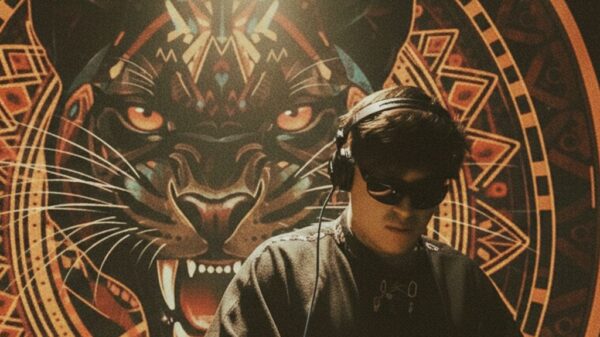





As he announces a new book and gears up to play a huge London anniversary show, Erol Alkan has spoken to NME about his memories of legendary clubnights Bugged Out and Trash, and how the rush of the ‘00s electroclash scene is still having an impact today.
DJ and producer Alkan has just emerged from two years dedicated to writing Trash: A Club, A Sound, A Home – an oral history of the scene-setting clubnight compiled of 70 hours of interviews with 39 figures from those who got on behind the decks and on stage there back in the ‘00s, combined with his own thoughts and memories of the era.
Trash was best known for its connections to the 2000s scenes like the garage-rock revival, electroclash and new rave. Bands like Yeah Yeah Yeahs, LCD Soundsystem, Peaches, Scissor Sisters, Bloc Party and Klaxons all performed there early on in their careers.
It was first located in Soho, before moving to the West End. NME once described Trash as “the greatest indie crossover disco of all time”, writing: “The very definition of eclectic, DJ and founder Erol Alkan’s playlist – who ran the club from 1997 until 2007 – would skip around gleefully from punk to pop via rock and disco, and the club also became one of the first places to worship at the asymmetric fringe of electroclash.”
This also comes as Alkan heads up a line-up at London’s Drumsheds this weekend alongside 2ManyDJs, The Avalanches, Kittin & The Hacker, Felix Da Housecat, Friendly Fires and New Young Pony Club for Bugged Out’s ‘2001&On…’ special day rave, celebrating the turn of the century’s game-changing and scene-setting moment.
A scholar of alternative music, Alkan said he still uses his stacks of vintage copies of NME as a “cheat code” and index as a DJ to find “less obvious things” that may not have charted from the era for his sets.
“The run-up to 2000 was when I was very much confused by what alternative culture was, so I became really invested in dance music,” Alkan told NME. “I very much lived my life in parallel to alternative culture and dance music culture co-existing on my record shelves and in my Walkman. I never, ever lost enthusiasm for music because there was always something that I was excited by; it just so happened that in the run-up to the new millennium it was mainly innovative dance music coming out of places like France and the UK capturing my imagination. That was fuelled by going to nights like Bugged Out at Fabric.”
He continued: “I had to really dig deep to find a lot of alternative music that I was really excited by. At the same time you had electroclash brewing, which you could kind of hear in the late ‘90s and early ‘00s, but it didn’t have a name and wasn’t a scene yet. It was just a collection of artists and labels doing something very much in the spirit of alternative culture.
“It wasn’t until The Strokes and The White Stripes came along with everything that I experienced through Trash that refocused it all.”
Check out the rest of our interview below, where Alkan also told us about what made that moment in time so unique, his thoughts on it being remembered as “indie sleaze” and how new generations are still carrying the torch despite suffering at the hands of the digital age.

NME: Hello, Erol. What was it like at that point in time when alternative culture had people back on the dancefloor again?
Erol Alkan: “Music seemed lost post-Britpop. The intention of indie and what it stood for was completely gone. What you had instead was this sanitised concept of alternative culture, which was very much in the hands of major labels.
“For me, it was Trash that changed everything. I was very much determined to bring together all the different things I liked and make it work together so people could dance to it and escape to it. I wanted to do it with different records and be true to me rather than just copy my favourite DJs from dance clubs. I wanted to make people be freaking out one minute to this Miss Kittin record, then be freaking out in the same way to a Manic Street Preachers B-side. That was my way of thinking and the challenge. All of this has value, all of this is brilliant, I believe in all of this, and you can dance to all of this.”
If you could distil it, how would you describe the DNA of your setlists back then?
“The character within each record was really important. How they were put together was almost scientific to some degree: how you would gently move from record to record to lead it some place markedly different from four records ago. One minute they’re dancing to The White Stripes and three records later it’s Felix Da Housecat, but without a brutal shift. Part of it for me was trying to tell a story or find the connections between these things that go across the alphabet with a musical clarity to it.
“All of this stuff is equal and brilliant. I knew that if I could make people dance to these alternative records the same way that they were dancing to dance records, then you can shift the perception around indie culture and indie clubs towards how dance clubs were seen. That was really the intention behind Trash.”
What change did you see in the audiences?
“Audiences change regardless. Anyone who goes into something expecting absolute loyalty, especially in clubland, is completely misguided. You have to be prepared to lose people; you’re going to lose people anyway. It’s like trying to hold water in your hand. It’s insane to think you’re going to keep everybody. You have to walk away from each night knowing you did the right thing. All the people who get it might come back for more, and that’s enough.
“If you’re precious about not wanting to upset to lose people, then you’re not doing the right thing for what’s in your heart and your head. You can’t be afraid to challenge people. If people aren’t walking off the dancefloor, then you’re not doing your job. Are you there just to please people? Or are you there to lead people? There’s a big difference. The absolute pinnacle for me is taking those risks and people going with you.”
What do you think of the era retroactively being labelled as ‘indie sleaze’?
“Personally for me, ‘sleaze’ isn’t a word I’m particularly a fan of. From my generation, the connotations that it holds are not something I’d take as a compliment. However, I also know how words are reappropriated and redefined. I don’t have a problem with the tag as such. To be honest with you, I’m very much of the mind that if a younger generation want to come along and redefine something, and to them it makes sense and that’s how they present it, then that’s fine.
“From my memories of that era, I can see where they got that word ‘sleaze’ from. For me that’s more from what was going on in America in the late ‘00s. I would say it’s more connected with that end of post-new rave, very LA, colourful American Apparel-adjacent scene. I can see how it has a connection to the Hedi Slimane end of indie that also happened, along with the east London thing and whatever.
“However, what I remember of the alternative scene is far, far wider, and far more eclectic and diverse than just that. As a word, as a scene, as a handle, it’s fine. They celebrate a lot of things in a way that is recognised, so it’s not completely reappropriated in an incorrect way.”


It’s said that the ‘00s held the last traces of the analogue era, where you could go out and cut loose without fear of everything ending up online…
“I think it’s very true what they say. I remember having a camera on my Nokia phone in the mid ‘00s. They were terrible, but they had a vibe. It’s very interesting to see what’s happened to young people over the last 15 years or so. A lot of kids are turning their backs on drinking and stimulants through the fear of being photographed or videoed in clubs, knowing that it can be so damaging. I really feel for them.
“I feel sad that young people feel like they’re being policed by other young people. That’s really quite heartbreaking. I’m not saying that they should be allowed to go out, do drugs and get smashed or whatever. I’m not condoning or encouraging that. What I am discouraging is that somebody’s character can just be so unfairly judged by strangers in a split second on a global level. That is just horrifying.
“I understand why people celebrate the era before that and people support things where the emphasis is on keeping your phone in your pocket, or having it zipped up or with a sticker over the lens. We all deserve privacy, even in public. It’s almost like taking paparazzi law into a mainstream existence. People should be allowed to get around their day without the fear of being captured and potentially judged.”
Do you notice younger generations still carrying that sense of freedom when they go clubbing?
“I do. I’m grateful that a lot of the people that come to see me don’t have a phone in my face all the time. I don’t mind if someone pulls a phone out and films. There’s been a constant throughout my career as a DJ where I’ve always been very fortunate to play to people who I want to share space with. I can be in a room with people who seem like good people.”

What do you have planned for the Bugged Out 2001 party at Drumsheds?
“I’m not looking to recreate anything as such. Whenever I play, it’s more about tuning into the energy of the occasion. Obviously this occasion is nuanced by the era, but it’s very important that Bugged Out have booked this with the primary focus that the people that are playing were prominent in 2001, but are still prominent and doing things of value and relevance now.
“You wouldn’t want to spoil that by going into it with something that’s just geared towards nostalgia, playing old records. I’ve never wanted to be someone like, ‘Oh, wasn’t it better in the good old days?’ That’s completely irrelevant to me.
“There will obviously be some nods to back then, but it’s all down to what point you’re playing in the night and who’s in front of you. There are so many inspired choices from back then that still sound great now, but there are so many things that have been released in the now that capture the energy of back then as well.
“I really want to catch as many of other people’s sets as I can. I’m very curious as to how other people will approach this. There are a lot of friends on the line-up, but it’s a Bugged Out event so there always are. I’ve been working with Bugged Out for 25 years now, so it’s always felt right.”


Other than being friends, what else do you have in common with the artists on the line-up?
“It’s a spirit, really. The musical aspects are quite far-reaching, really. Unashamedly, we’re all fans of pop music in some way. I don’t think any of us have ever viewed ourselves as being underground. I don’t think we’ve taken ourselves too seriously. That’s not to say we’re not as important as other artists, but we come at it from being unashamed to say that we are music fans as much as we are artists.
“Bugged Out, being around for 30 years now, they’re still staying on top. Their approach to putting on dance events has just been so important and inspirational for me in my DJ career that I wouldn’t be here if it wasn’t for them.”
Bugged Out’s 2001&On will be held at London’s Drumsheds on Saturday October 10. Visit here for tickets and more information.
Erol Alkan’s Trash: A Club, A Sound, A Home will be published by Faber on January 14 2027.
