







T
hirty years ago, Linda Perry almost let the bastards grind her down. She’d left her band, 4 Non Blondes, at the apex of their success and was primed to drop her first solo album, In Flight, a personal look at her struggle with alcohol.
Perry says that the label wanted to call the record 4 Non Blondes, which baffled her. “I’m all, ‘Why would I fucking call it 4 Non Blondes? It’s such a different record?’ And so they shelved the record,” she says. “I was like, ‘OK, I need to take another route because I’m just too personally invested in this shit.’ ”
Over the next three decades, the 61-year-old artist carved out a career as a songwriter and producer — working for the likes of Pink, Dolly Parton, and Christina Aguilera — but she struggled to reclaim her voice. It was only during the filming of Don Hardy’s documentary about her, Let It Die Here, that she found it again. That film, out May 19, led to an album of the same name, Perry’s first in more than 25 years — and a new project from 4 Non Blondes is in the works for later in 2026.
Perry and the filmmakers have scheduled a series of Let It Die Here screenings, Q&As, and acoustic performances, beginning May 8 at the Regal Union Square in New York. It hits L.A. on May 13, San Francisco on May 17, Denver on June 5, and London on June 21.
“I feel like my channel’s super clean right now and it’s super focused,” Perry says. “Because I feel that when we’re just open and ready to receive, things just come.”
What led to the decision to make that documentary?
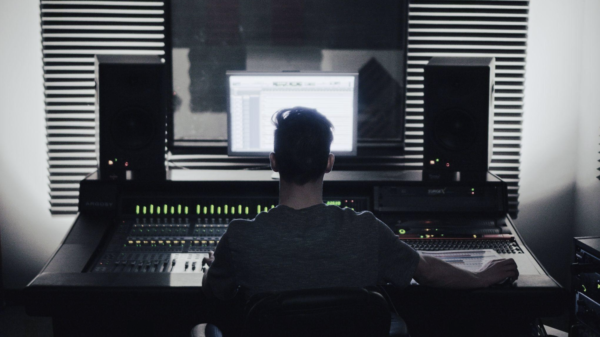
There was no decision; let’s be clear. I thought I was getting some social media content, and that is my story. Don Hardy and I, we worked together on this film called Citizen Penn, about Sean Penn when he went to Haiti during the earthquake. I scored the film. And then Don was like, “Hey, you’re so interesting. Can I just be a fly on the wall in your studio?” Cut to things happening as things do for some reason when the camera’s rolling.
I’m a moment girl. I’m not planning much ahead. I was going through some stuff. I was having a lot of confusion about who I was as an artist because I felt like I lost my identity … and that’s what was unraveling in the documentary.
There’s a scene where you’re dancing to Supertramp in your closet and crying, saying you never dance anymore. Why did you stop?
It’s one of the most embarrassing scenes in the whole film. In San Diego, there was this club called Studio 9. And I used to dress like, I kid you not, Luke Skywalker. I would put socks over my boots; I had these white pants on; I’d tuck them in my socks. I wore this white, almost-kimono thing with this industrial white belt. I had a mohawk, it was jet black. And I would just slip around. Now, mind you, I’m on acid, too, so I’m thinking I’m the greatest dancer.

But then you get older, you become a mom, you start caring about everything. And I think that at that moment I’m going, “What the fuck? Why do I care so fucking much about everything?” And I think I had that moment because I remembered that kid with a mohawk that looked like Luke Skywalker on acid, just so free, and I’m so not that anymore, so far from that.
How did you find yourself again?
Because [of] the documentary, to be honest. When I saw that girl — and I say “that girl,” because it’s still hard for me to understand and comprehend that that documentary’s about myself — I felt really sorry for her. I felt like, “Wow, she’s trapped. She’s stuck.”
It seems you also rediscovered your connection to 4 Non Blondes. How did that happen?
When we were asked to do [a festival], I [told the band I] don’t want to play any of the songs off the 4 Non Blondes record except for “Train” and “What’s Up.” [So] I just wrote a whole album. And then that’s what we played at all these festivals. It’s a dumb, fun, Nineties rock album.
Your solo album is much darker.
It’s all about my mom. And listen, I ain’t going to lie, it’s a deep record. It’s a lot to take in. I know that. I apologize in advance. But I didn’t really think about how people were going to receive it. I think it’s a really beautiful album. I absolutely love it. It will hurt if people don’t, but I will stand by it 100 percent.

You also went through a breast-cancer diagnosis during filming and got a double mastectomy. How did that affect you?
When I was growing up, you were either a dyke or you were a fag. There was no in-between. There weren’t all these nonbinary they/thems. There were no labels. You were this, or you were that. So I’ve always been this genderless little human being. The reason they found [the cancer] is because I wanted a breast reduction. I just wanted cute little Kate Moss boobies. So, one day I had cancer and the next day I didn’t. And I’m fine. And it was very freeing.
I’m glad you’re healthy now.
I’m always going to be healthy. I’m not going down that way. If I could have, I would have been out 30 years ago, but that wasn’t in my cards. So I’m going to be one of those people that’s going to be tortured, and I’ll be here like 104, 105, and I’m just going to be so miserable about it. I know that that’s my destiny.
Will you still make music?
I’m going all the way, baby. I’ll produce my death till the end. I’ll have it all written out, what songs to play in what order, making this my opus of my death.
What songs?
I don’t know. I have to write them.

