






Dance music has had a rough go of it in recent months — from clubs shuttering en masse to event cancellations due to goon-squad invasions of American cities. Now, a new test of the DJ ecosystem has reared its insidious head: the clout deepfake.
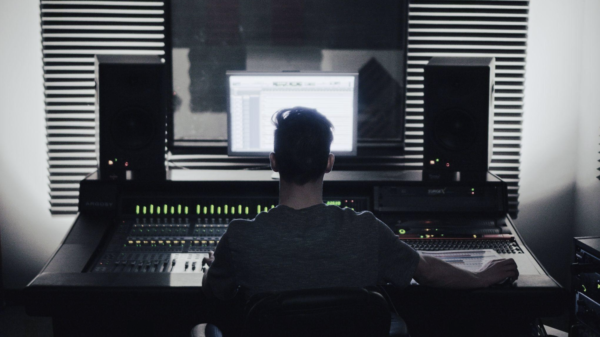
This disturbing trend has taken on a couple of forms — so far. The first is the simplest: namely, fledgling dance producers have been hijacking footage of big-name DJs playing to jumping crowds, overdubbing their own music onto it, sharing it to their socials, claiming clout that doesn’t actually exist, and fooling fans and potentially even record labels in the process.
It bubbled to the surface in early January, when Alex Pall of the Chainsmokers posted a note on LinkedIn that set off a fusillade of responses. He called the trend “kind of genius, kind of dishonest, but just really interesting to watch play out.” Pall continued: “[T]o the average viewer, it feels like the song … [is] blowing up, getting played out, building momentum. But it’s not real … It’s just someone pasting their song over a clip and letting the internet fill in the rest … And the wild part is how well it works … If it’s that easy to fake momentum, then what does ‘support’ even mean anymore?” (Pall declined Rolling Stone’s request for further comment.)
If that weren’t bad enough, the clout deepfake has been upped to another level. On Facebook on Feb. 11, deadmau5 wrote a note in his typically no-holds-barred style that said, in part: “WELL, IT HAPPENED. [sic] Woke up to some idiot DJ’s Instagram story … that depicted me standing there promoting him and his music. FULLY AI generated, voice wasn’t quite 100% but pretty damn convincing … I’m sure we’re all going to be seeing much more of this.”
Reached on tour in South America, deadmau5 confirmed that the producer behind this AI double (whom he declined to name) was previously unknown to him: “He was a fan that came out of the woodwork.” He tells Rolling Stone that it’s the first time this has happened to him or anyone else he knows, but adds: “I wasn’t immediately aware but this is all not surprising. The technology is moving fast and people are jumping on the bandwagon. This was someone faking me … We need to be in control of our own faces, voices, music, output — what have you. Protections are necessary now more than ever.”
Editor’s picks
To that end, Dina Lapolt, deadmau5’s lawyer, is working on a bipartisan bill — cosigned by Senators Blackburn, Coons, Tillis, and Klobuchar and Representatives Salazar, Dean, Moran, and Balint — dubbed the NO FAKES Act of 2025 (it stands for Nurture Originals, Foster Art, and Keep Entertainment Safe).
In an email to Rolling Stone, Lapolt says the bill “would create a new intellectual property right in your voice and likeness — with real statutory protections, just like copyright and trademark. This isn’t just about celebrities. From athletes and entertainers to journalists to everyday Americans, deepfakes and voice clones can wreck careers, scam families, distort public discourse, and leave a trail of exploitation, humiliation, and real emotional harm across the internet. It’s time the law caught up with the technology.”
But the technology keeps running away with the law. According to some seasoned onlookers, this type of thing has become almost inevitable — and reflective of larger changes in the music business in general, but around EDM in particular.
Lawrence Jones of Mutual Friends, a U.K. management company, has watched the changes up close. “When I first started, which is about 2015, vertical video did not exist,” says Jones. “It was still horizontal.” Jones worked for a management company that got results by arranging interviews with online publications. Video, as he describes it, “was a kind of peppering on the top.” Today, Jones says, video is “80 percent of it, compared to maybe 15 to 20 percent of it beforehand. It quite literally has flipped on its head.”
Related Content
That change of promotion is part and parcel with the way EDM has shifted gears over the years. In the mid-2010s, there was a major-label gold rush on, with some companies signing artists not only to release albums and singles, but also to produce and remix other artists on the roster.
That situation has changed entirely, according to Martin Kandja Kabamba, who runs the agency NOAB London. “When I first started working in music in London, every single one of the artists that I was working with was on a major deal,” he says. “Now, of the 16 artists that I work with, only two of them are in a major deal. Majors aren’t signing electronic music like they were previously. If they do, they’ll sign one single.” And dance singles can be advertised simply and cheaply, with a single eye-catching Instagram or TikTok video.
But an album rollout is costly and seeing an ever-decreasing return on investment. Last year, an artist on Kabamba’s roster released an album on their own label. At the end of the cycle, Kabamba recalls, “They were like, ‘Well, the album thing was fun last year. But it wasn’t really particularly profitable for us, and we could have just released a string of singles, and not have to deal with the bigger aspect of building the album.’ So, I think even people who have the opportunity to build albums are also moving away from it, because the singles economy is way more profitable, because of how music is consumed on social media. They don’t need to have a social team on for a whole year to help build the digital presence and community of that artist.”
With one-shot signings now the norm, and with the traditional talent departments that nurtured acts for the majors basically evaporated, the onus is on the new artist to get noticed any way they can.
“The amount of record labels that I know that are signing songs purely based on the fact that there is a reaction to it in a clip — that’s probably the number-one way of signing dance music at the moment,” Kabamba says. “If that really is taking the place of artist development, then we have a problem. Obviously, we’re going to have the symptom of that — people using clips in this way in order to try and game the system.”
Trending Stories
And how much visibility would a newcomer artist have to garner before the majors even came knocking? “Ten million views-plus, for someone to actually notice that you’re doing something,” says Kabamba. “Anything under that on social [media] is like a drop in the ocean.”
Hence all these fake co-signs of late. But can we hope that this sort of thing is an aberration — the work of kids who simply haven’t been shown the ropes yet? Not likely, according to Kabamba. “In many ways,” he says, “these are the ropes.”