






When tracks by fictional artists Breaking Rust and Cain Walker earned top 10 status on Billboard‘s Country Digital Song Sales in November through the use of artificial intelligence, Nashville’s music community wrung its figurative hands, fearful what the future will bring now that the AI genie has permanently escaped the bottle.
The technology wasn’t a surprise — some country songwriters have been Suno wrestling for the better part of a year — but the way in which it was employed in those public recordings was disturbing. It broke informal rules that professional music makers have employed in their own work and raised important questions about the future of music creation.
“We’re in a really weird time,” Priscilla Block noted on the red carpet at the Country Music Association Awards. “We’re all just trying to figure it out.”
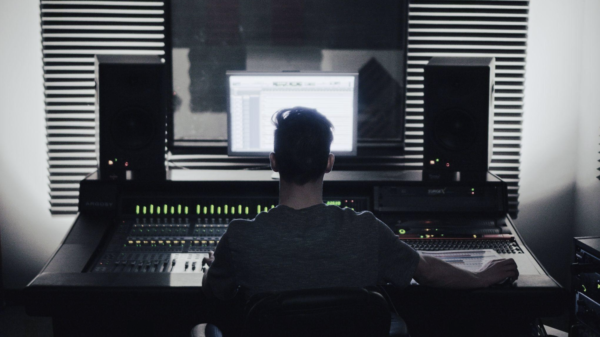
Suno is the AI music tool most often deployed in Nashville, used primarily to speed the process of production, to serve as a sounding board or to spur new ideas for creatives who find themselves stuck. The evolving perspective on Music Row held that AI productions were appropriate tools to build the demos that show a song’s creative potential. Under that code, Suno music wasn’t meant for retail consumption.
“If you use it as a tool, it’s one thing,” Brantley Gilbert suggested. “If you use it as a whole vehicle, it’s another.”
That hasn’t stopped the average consumer from using Suno in that way. The company claims that every two weeks, its users — primarily males, aged 25-34 — churn out as much new music as currently exists on Spotify. Much of it, however, is uninspired.
“Anything that AI has ever spit out, to me, is usually just super formulaic,” Tyler Rich observed. “But there might be a word — like, one word in the verse — that I [keep], that flips your brain somewhere else. I have no problem with that. I think it’s a great tool, but I can’t imagine AI writing a song that’s going to get played on the radio.”
Related

Rich recalled one of his first experiences with Suno, when he was one of three cowriters meeting one another for the first time. As a get-acquainted exercise, they threw some of their collective influences into an AI pot to see what it might create, then used that sound as a starting point for the song they wrote that day.
That, gauging by the guidelines followed by writer-producer David Fanning (“Tennessee Orange,” “Gonna Love You”), would seem to be fair use. It provided a reference point, not an entire song.
“From the writers’ room to a demo, I think it’s cool, what you can do with it,” Fanning said on the BMI Country Awards red carpet. “After that, I’m out on AI.”
While the average Suno consumer is under age 35, the country creators sampling the tool span a wider demographic range. Adam Wheeler, who started his songwriting career over two decades ago and has recent recordings by Megan Moroney and Zach John King, used Suno for the first time this fall to create the supporting music for a demo of a song he had written. An artist placed the song on hold, so the AI arrangement was at least strong enough to frame the actual material in a favorable light.
Suno isn’t an automatic success. Writers frequently run their songs through the platform three times or more before they get a version they like, and even that version will likely need some adjustments.
“I use Suno when I’m by myself and I just want to hear something,” songwriter Dallas Davidson (“Play It Again,” “Tonight Looks Good on You”) said. “I use it for the production, but then you still got to go tweak it.”
And even then, the results are likely missing an element that’s hard to quantify.
“[Suno’s] got no soul in it,” Davidson said.
The technology raises obvious fears. As it develops, Suno could draw from the existing body of recorded music to develop new songs and put a dent in the income of real people who devote their professional lives to music. Even more immediately, the embrace of the technology by Nashville songwriters and producers could harm the development of aspiring musicians. Playing on demos is a traditional path into studio work, and the rise of automated forms could limit those recording opportunities.
“They’re kind of the soul of Nashville,” HunterGirl said. “What they bring to a song is just so valuable.”
Assuming the quality of AI recordings advances as quickly as AI images have, it could become near impossible to distinguish between live musicians and artificial sound within just a year, making it even more tempting for creators to increase their use of faux voices and instruments. That would certainly impact the economics for Nashville’s creative talent. Still, musicians have fended off mechanized music before — the drum machine, for example, was considered a threat to real drummers when it was developed in the 1980s, but many drummers simply adapted new skills and treated programmed sounds as an extension of their art.
“I’ve been doing this long enough — we didn’t have streaming, we didn’t have social media when I started,” said Dustin Lynch. “We didn’t have drum tracks to write to. We didn’t have any of the editing software we have and we’ve weathered it just fine.”
Related

Creators are hoping for some mix of legal protection and industry self-regulation, not only for the benefit of music pros, but also for the general public, which arguably has a right to know when the music it’s ingesting is artificial.
“At the end of the day,” Hunter Hayes said, “we’re making the music for other people. To me, if we’re talking about protecting anything, it’s the integrity of the thing that we’re making because of the people that we’re making it for. We owe them a human conversation, so I want to make sure that that stays at the heart of it.”




